I entrust this work to Jesus through the hands of Mary
1 Timothy 2:3-4 “This is good, and it is acceptable in the sight of God our Savior, who desires all men to be saved and come to the knowledge of the truth.”
First, disclaimers:
- As of January 2023, My Hero Academia is an incomplete work so I can’t comment on the series as a whole.
- While I would recommend it if you like typical shounen stories, the series might scare off some readers because it isn’t super short.
- And of course, there will be spoilers (for things mentioned up to chapter 326).
Second, a quick summary (if you’ve seen the series jump to 3):
My Hero Academia (MHA), takes place in a world where 80% of people have a genetic mutation called a “quirk”. Think of this as X-Men but not as secret. With such a high percentage of the population there’s everything from simple quirks, like super speed, all the way to complex quirks, like being able to steal or transplant the quirk of someone else.
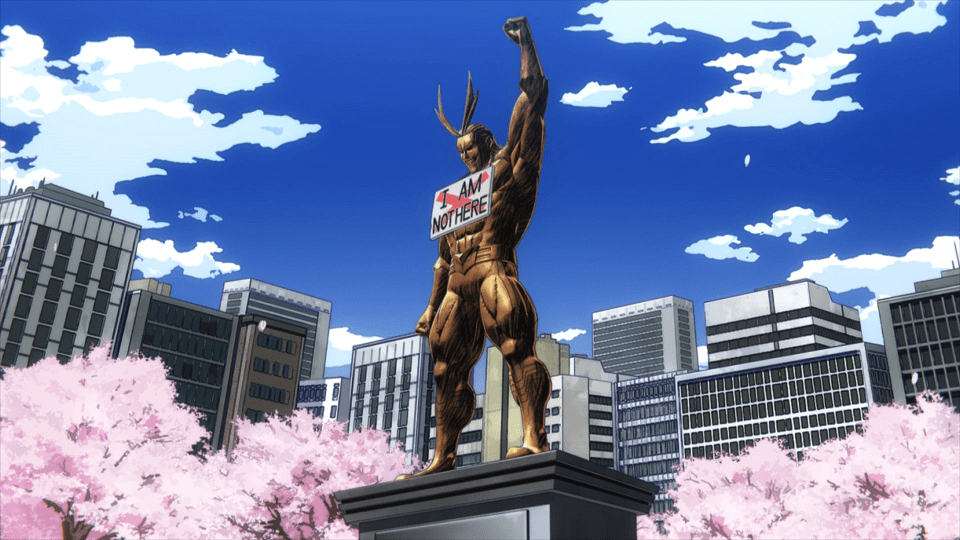
It goes without saying then that “superheroes” have become a normal part of life simply because villains are a part of life. Within Japan, the superhero “All Might” is #1. He’s pretty much the perfect hero. He smiles, laughs, always saves everyone, and always defeats the bad guys. But there’s one problem: he’s dying. That’s where our quirkless main character Deku comes in. He’s a big fan of All Might, and after All Might witnesses Deku rush to protect someone despite being quirkless, he passes on his quirk to Deku. Thus his super strength no longer puts strain on his body allowing him to live a little longer and coach Deku along. Now that he has a quirk Deku can attend the esteemed U.A. Hero Academy and start down the path to becoming a professional hero.
What I like about MHA is that it’s not simply “here’s a villain doing bad stuff now stop him”. One of the recurring themes is how the hero system itself isn’t perfect. There are many people who become heroes because it pays well and the public likes you for it. Afterall, if there’s a real bad villain then someone like All Might will take care of him. Since the series pretty much begins with All Might losing his strength and passing on his power it quickly sets itself up for this peaceful bubble to be popped.
Third, what’s this about?
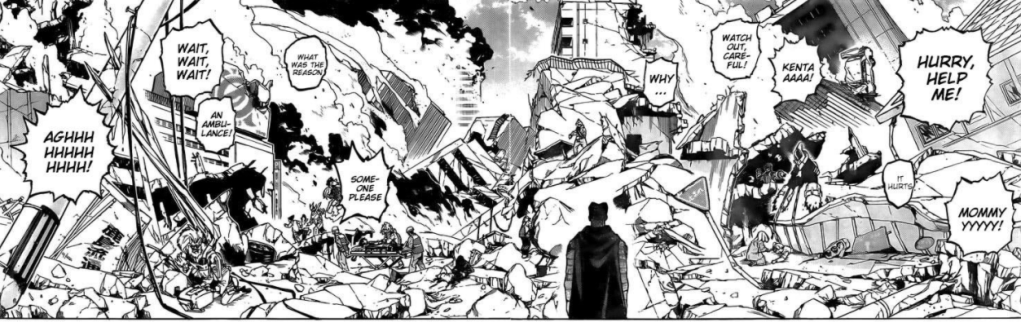
I think a major turning point for MHA is season 5 (late 200’s in manga). The heroes’ organization has just pulled a massive operation against our “bad guys” and lots of things go wrong. Multiple cities end up demolished, many top heroes are killed or severely injured, and a scandal breaks that the new #1 hero “Endeavor” abused his family in his struggle to climb the ranks.
In the aftermath, we watch Deku’s classmates carryout search and rescue operations in a city that’s been destroyed. It’s here we get a scene of a hero just standing still while everyone is running around. He’s in shock that something this terrible could have happened and he mutters a line that sums up the underlying problem: “I need to find a new line of work.”
For this man “hero” was a profession, a career. It was something you were on and off the clock for, that you got paid for, that you could joke about and complain about with people on the job just like any other job you might have. But being virtuous isn’t an exterior role for us; it’s an interior disposition which informs all our actions – whether we’re on or off the clock.
Unfortunately, this one example isn’t the minority. Over the course of the series, we’ve seen too many people that treat being a hero just like a regular job. Case in point, after this operation many heroes resign/retire and are viewed as quitters by the common folk who now take policing into their own hands.
So where does the series go from here?
We might think a typical answer to such a societal problem would be for the “good guys” to preach a “do good deeds even if they’re difficult and no one thanks you” attitude. In all fairness, My Hero Academia probably falls into this mentality a few times. But I do think the show sometimes goes beyond this by answering the question “why do we continue in the face of difficulty?” MHA doesn’t always make this question explicit, but what we see is that everyone is worth saving because everyone has inherent worth and dignity as a person.
Related to this is another theme that runs in the background of MHA: how do we treat villains? Do we capture and restrain them, or eliminate them? And who is the one to judge which course of action is taken?
Take for example the character Lady Nagant, a hero whose quirk allows her to be a deadly sniper. As a professional hero she was tasked by the Public Safety Commission to take care of loose ends and cover up the choices made by the Commission that they didn’t want the public to know about. She eventually snaps under the stress of living a double life to the public and kills her commanding officer in an attempt to get out of the system. She ends up going to prison only to be freed years later by our “big bad guys” who enlist her help in capturing our main character, Deku.
Are you going to make your point already?
Yes, I am. To do that I want to look closely at the fight between Deku and Lady Nagant. On one hand it’s very cliché but that also makes it easy to understand because we’re pitting two stereotypes against each other: the calloused veteran Lady Nagant who’s seen the dark side of hero work and wants to destroy the system vs. the young idealistic student Deku who wants to be a symbol of justice and peace just like All Might. Obviously Nagant can see her past self in Deku and that causes her to scorn him all the more.
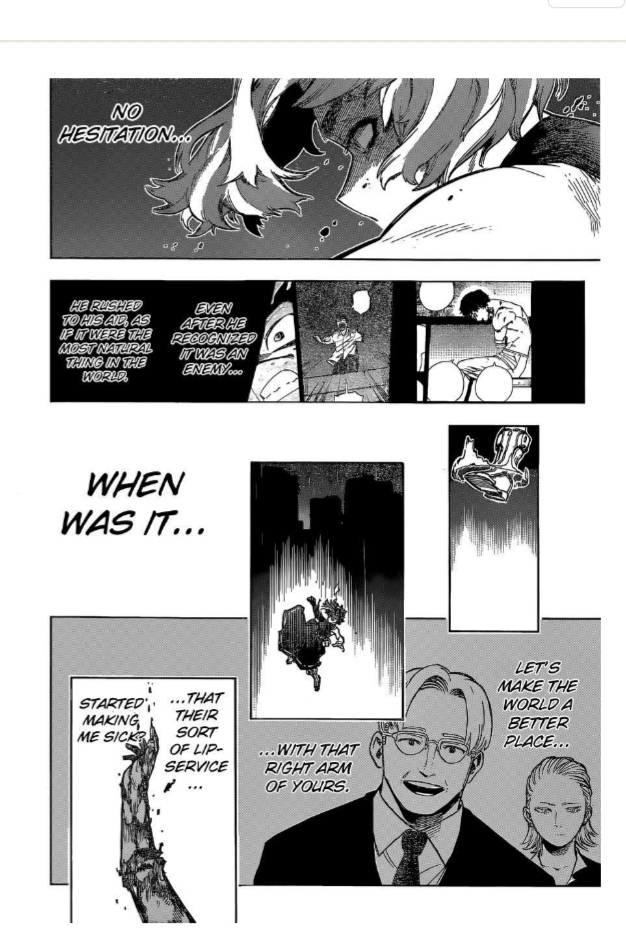
Towards the end of their battle – when she is almost within Deku’s reach – she fires her rifle at an incapacitated villain nearby, thinking Deku will hesitate between choosing to save him or letting him get shot and this will give her enough time to escape. However, Deku doesn’t miss a beat. Not only does he not hesitate in choosing to protect this incapacitated villain, but because of this he’s able to pull him out of the bullet’s path, and wait there’s more! He then immediately jumps back to grab hold of Lady Nagant who in escaping lost her balance and was in a free fall. Even if she was just trying to kill him, Deku has a desire to save anyone he can.
Fourth, that’s great but isn’t this a Catholic blog?
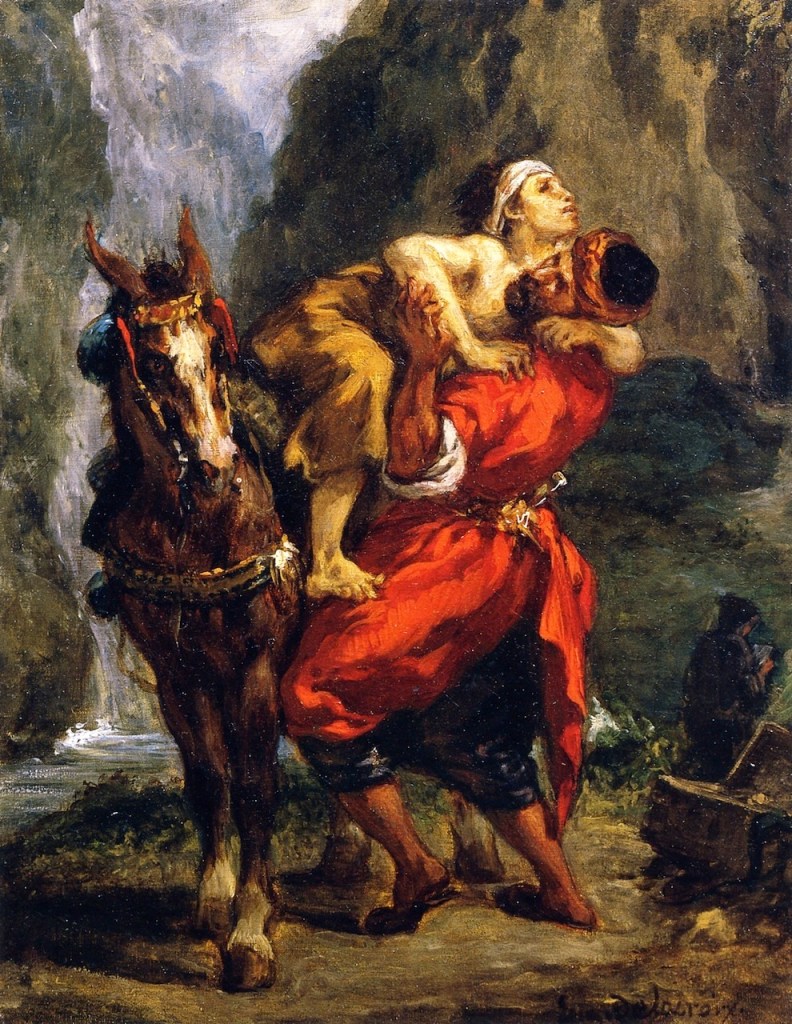
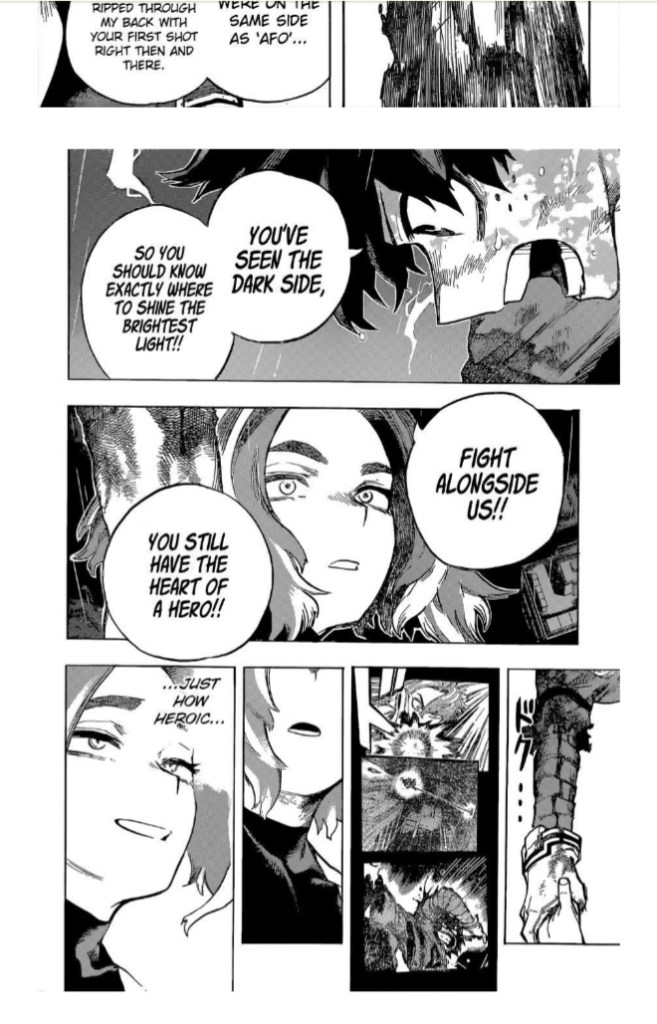
It is, and here’s the point. Remember when Jesus says “love your enemies, and do good and lend, expecting nothing in return” (Lk 6:35). Deku is someone who does not hesitate to love his enemies. He saves people not because it’s his job, but because he wants to save as many as he can; and he’s not going to let anyone tell him he can’t. In comparison to those who are simply heroes for a job, Deku is the real deal. This is why when Lady Nagant witnesses his lack of hesitation to save not only a bystander but also herself, she has a conversion. She realizes that there are indeed people who aren’t just doing this for a job but who honestly want to help everyone they meet. Why is Deku’s behavior either so inspiring or so infuriating? Because, as our opening verse points out to us, the desire to save is a very Godlike desire.
But we can ask the question: is this realistic behavior? Is Deku simply an ideal but ultimately unrealistic character? Or is his behavior something we could actually do? And if so, what has to happen for someone to get to Deku’s point?
I think our way into answering this comes from Genesis 1:26 “Then God said, ‘Let us make man in our image, after our likeness’”. We obviously aren’t God, and we don’t ever become God, but we are made in His image, and we can become His sons. The result is that through Jesus Christ and being filled with the Holy Spirit we can do Godlike things. This establishes two things that I alluded to earlier in section three:
- Every human person has an inherently dignity or value being made in God’s image
- As sons and daughters of God we learn to see as God sees, to rejoice in what God rejoices in, and to love as God loves.
If you haven’t read C.S. Lewis’ The Weight of Glory, take some time to read it over. Lewis has a great way of getting us to see the eternal value of our neighbors around us – and not just those we like but everyone!
Fifth, God desires all men to be saved
WE ANSWERED THE QUESTION!
We see then that Deku’s attitude is not just a nice ideal in a story but a real disposition we can and have begun through Baptism into Christ Jesus. But I know from my own history that I’m not perfect, and that I fail to love my enemies as Jesus instructed us. So how do I change? If we’ve established the foundation, how do we reach the level of love of a “true hero”?
We can start with very simple actions. I myself like the example of St. Therese of Lisieux. Whenever one of the other sisters in the convent would get on her nerves, she would picture Jesus in their place. If someone was making a lot of noise in the church, she would offer it as a song to God. For myself – believe it or not – I run into a decent amount of people who don’t like anime. But I know they like a lot of things that I don’t really like and so I thank God that there’s someone who is able to appreciate His creation in a different way than myself.
But people who annoy us or who disagree with us aren’t necessarily our enemies. What about people that actually hate us? Keeping in mind the fact that God desires all men to be saved I think of 2 points.
First, while we still breathe, there is always time to repent. This is true for us and our persecutors. Lady Nagant had turned her back on the hero society, been imprisoned, and was hunting down Deku to help capsize what remained of the hero society, and yet she was able to have a conversion before dying precisely because Deku loved his enemy. This is also why, like Deku, we must not hesitate in our evangelizing efforts to all people. Because once we pass from this life, there is no more chance for conversion.
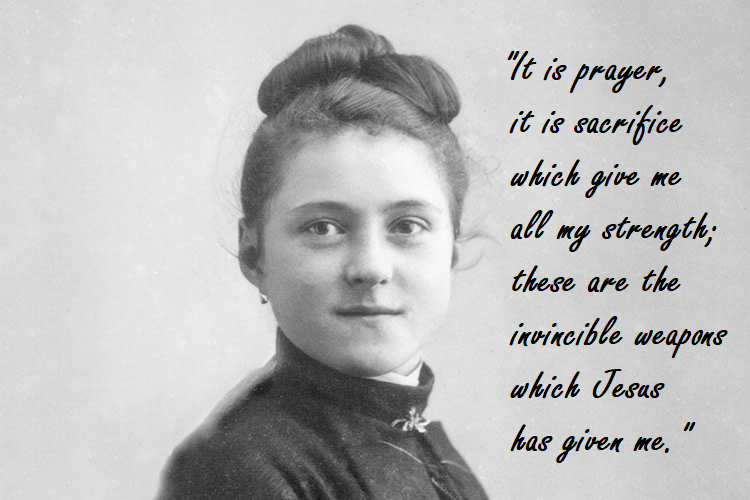
Second, for those actively persecuting us, what do we do? We don’t have quirks like the characters in MHA that allow us to “fight back”. But we do have something much more effective. Here again I’ll defer to St. Therese: “it is prayer, it is sacrifice which give me all my strength; these are the invincible weapons which Jesus has given me.”
Prayer is not magic, but it is effective. Prayer is not just words. It is action. And if it is authentic, it will be invincible in the end. Our Lord prayed in Gethsemane for the strength to endure the way of the cross that lay before Him. Think also of the first 300 years of Christianity and of all those being persecuted for following the way of Jesus who prayed for their persecutors. It wasn’t magic, it was prayer and it was effective.
If I can put forward a final, more recent, example I would use the pro-life movement within the United States. The overturning of Roe v. Wade can only be understood within the context of the ceaseless prayers, vigils, fasts, marches, rallies, etc. of pro-life supporters. These are our invincible weapons, and we do not use them only for earthly justice to be satisfied but because we desire all men to be saved, not just those who pray and march with us but for all the doctors and women and men who have promoted the contraception, abortion, and pornography industries. They too can have a conversion away from the culture of convenience and towards the full knowledge of the truth that we are made in God’s image.



 Anime Christi
Leave a reply to Traditional Catholic Weeb Cancel reply