I bring this work to Jesus by the hands of Mary our Mother
2 Corinthians 1:21-22 “It is God who establishes us with you in Christ, and has anointed us, and who has also put his seal on us and given us his Spirit in our hearts as a guarantee.”
1.) No background
If you haven’t heard of My Hero Academia (MHA) or read our previous article about it, you still wouldn’t need much of an introduction for the purpose of this post.
Picture a world where superpowers (a.k.a “quirks”) are common fare. Our main character, Deku, was quirkless when out of nowhere he’s given a power by none other than the number one hero in Japan. Deku and his classmates spend their school days at the Hero Academy developing their quirks to become professional heroes.
Congratulations, you’re officially in the loop : )
2.) Our focus this time
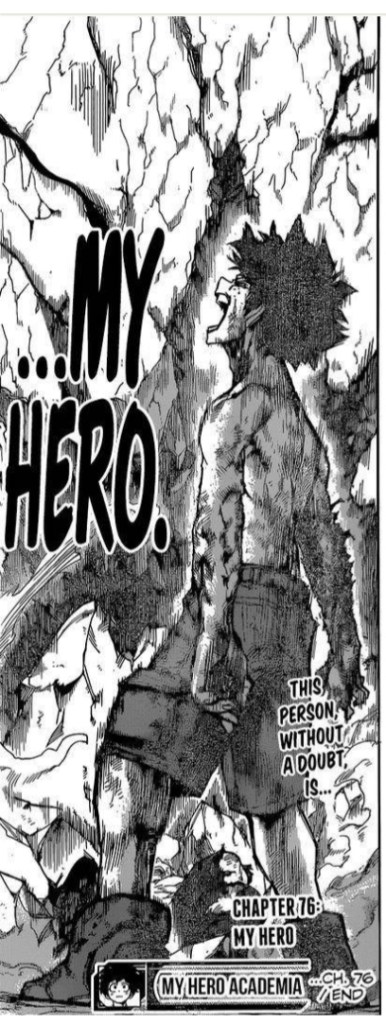
MHA makes it quite clear that by persevering in training, people can expand the range, duration, or other qualities of their quirk. E.g. you can produce hotter flames, or float longer, or control more objects with your mind. The initial power is there but it can deepen and grow into something particular to how the individual uses it.
3.) Jumping to Church Talk™
We can see some obvious similarities between quirks and the Catholic view of Sacramental Character. That’s another way of saying the indelible mark left on our souls by Baptism, Confirmation, and Holy Orders. I think too often people see Baptism and Confirmation as getting your hand stamped at an amusement park. BOOM BAPTISM! Congratulations, now you’re officially allowed to do “Catholic Stuff”
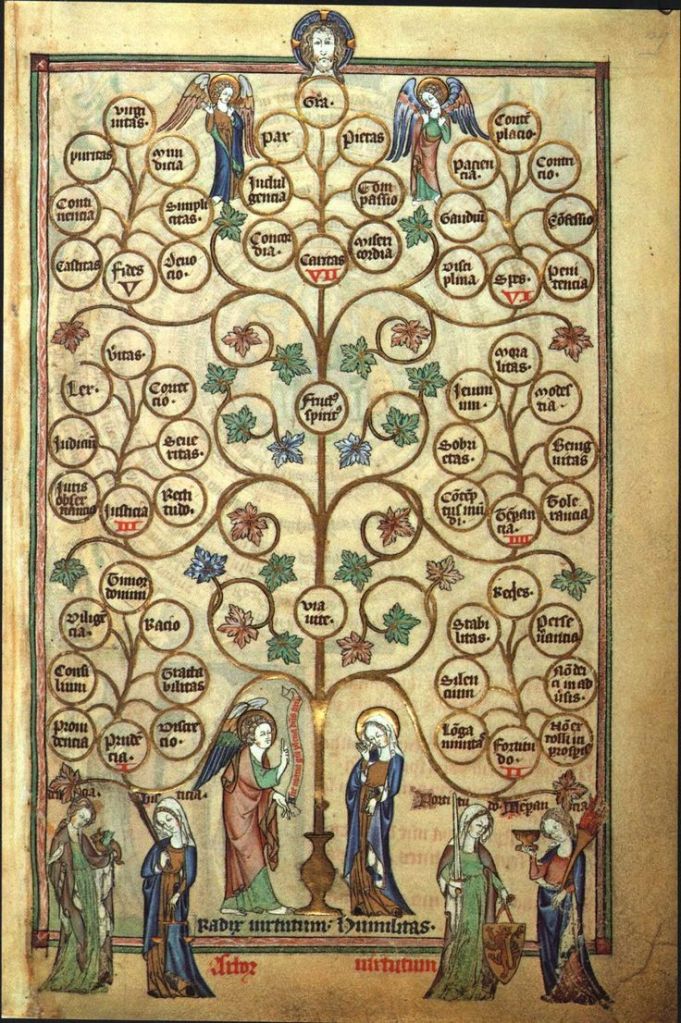
But baptism is so much more! It places a well springing up to eternal life in the soil of our soul! If we allow the life-giving water of the Holy Spirit to enrich all parts of our life then we will bring forth trees and plants of every kind. But we could also neglect our baptism. The well placed in such a garden would still be there but would grow stagnant, the garden would get overgrown with weeds and we might even put a lid on this well of life-giving water so we don’t have to look at it.
MHA does a good job of showing how if we are to develop our gift we need to put in the work. We haven’t earned in anyway such a gift as baptism – or in MHA, the person’s quirk – but because we have been given it, we can decide to cultivate or neglect it. Over the course of the show this has been shown quite nicely in the character development of Kirishima, Todoroki, Bakugo, and of course Deku.
4.) Is there another level?
Now many of you might be saying “That’s great but what about when someone’s quirk gets taken away and they’re left powerless? That doesn’t fit your baptism comparison at all.” You’d be right. Baptism, Confirmation, and Holy Orders can’t be undone or redone. But the other sacraments can.
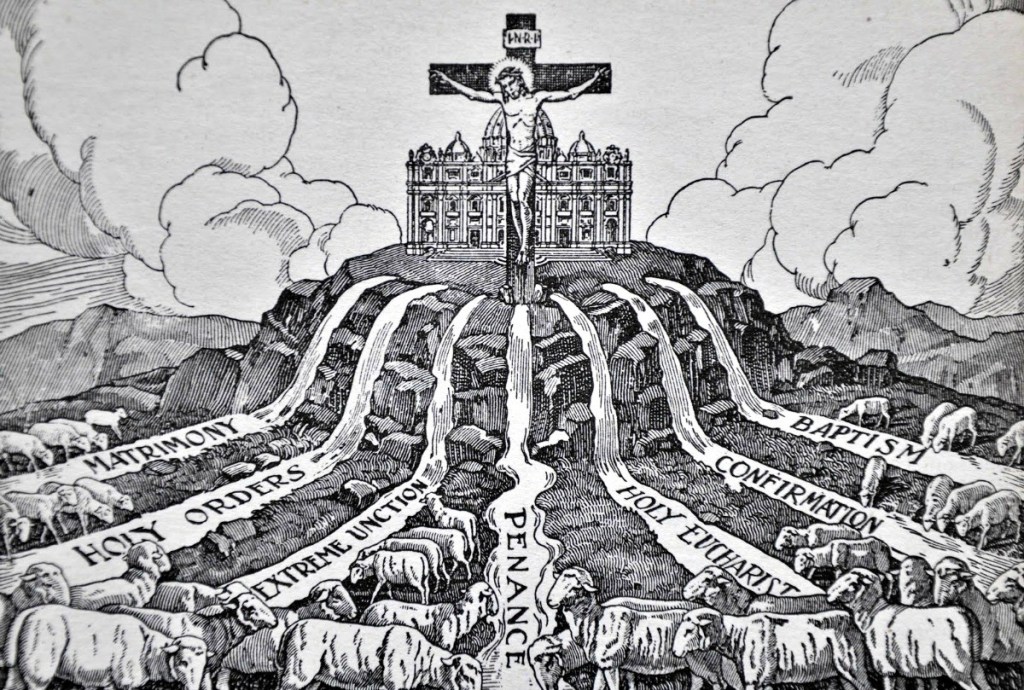
This is where we can dive into some good old scholastic terminology. This will let us distinguish 3 parts to each sacrament. The first term is sacramentum tantum which refers to the liturgical rite by which the sacrament is conferred. For example, the vows exchanged in Matrimony, the water and trinitarian formula for Baptism, the words of consecration for the Eucharist. The second term is res et sacramentum, this refers to the reality which the sacramentum tantum gives to those receiving the sacraments. For Baptism this is the indelible mark, for the Eucharist it’s the Body, Blood, Soul, and Divinity of Christ, for Matrimony it’s the marital contract established between the spouses. Finally, we have what’s called the res tantum which refers to the graces and consequences of receiving the res et sacramentum. In Baptism this is the forgiveness of original sin, in the Eucharist it’s an increase in charity and communion with the Body of Christ, in Matrimony it’s the grace to live out married life.

4.2 Okay that was a lot…
But we’re done with terms now! And if you want a crude analogy, think of it as the giver, the gift, and the use of the gift. These 3 terms help us quite a bit. Let’s look at the repeatable sacraments using the terms we’ve learned and the question from before about quirks that can be taken away.
First, we’ll compare a quirk to the res et sacramentum that is received. The superpower or ability is always there but not always manifested. Additionally, just as a quirk can be trained and honed to a better degree, so too can the sanctifying grace we receive in Baptism be deepened and greater love of God can be poured into our hearts (Rom 5:5). But let’s return to the question of people that have their quirk stolen. How does this fit into the scheme?
5.) Let’s get our answer already!
To answer the question, let’s use the Eucharist as our example. Recall we said the res et sacramentum of the Eucharist is the real presence of Christ: Body, Blood, Soul, and Divinity. We indeed receive this but it does remain in us forever. We all know that when the Host loses the characteristic of bread or wine it ceases to be the Eucharist. This is where the practice of ablution cups comes from and why we don’t become permanent tabernacles of the Blessed Sacrament from our first Communion.
The logical consequent then is that because the res et sacramentum is gone, the channel through which we receive the res tantum is also gone. The practice of making a spiritual communion is precisely asking for the graces of Holy Communion – the res tantum – while not having received the res et sacramentum. You’ll also notice that spiritual communion does not replace sacramental reception because in only the latter do we actually receive the true presence of our Lord.
Thus, in My Hero Academia, when a person’s quirk is taken away they no longer have the means to use their power. But, when this is restored to them, just like receive Holy Communion, or Reconciliation, they are able to use their quirk once more.
6.) So then, we’re done?
Almost. We talked about a couple things. First, the graces that come from the sacramental character. Second, the gifts we have can be developed through our actions. Now let’s put them together. In baptism we are given sanctifying grace and the indwelling of the Holy Spirit. This is deepened in Confirmation when we receive the gifts of the Holy Spirit. Now these gift and virtues – just like the quirks of MHA – don’t have to be used. However, when they are used it becomes easier to use/take action the next time. This is how literally how habits and virtues are built: by doing individual good actions repeatedly. Is this difficult at first? Completely. It’s impossible without God’s help. But, does it also become easier the more we practice? Of course. Deku couldn’t use 10% of his quirk to begin with but was able to slowly increase his body’s capacity.
As Christians we need to be confident in our Baptism because by it we have been united to Christ. We know that the Holy Spirit dwells in us and by His grace we have Faith, Hope, and Charity. Now this isn’t like a spiritual communion where we ask for the graces of the sacrament despite not having the reality and sign of the sacrament within us. Rather, Baptism is permanent so as long as we haven’t caused the Holy Spirit to depart from us by grave sin, we can continually call upon the Holy Spirit to give us more grace, more help, more assistance in carrying out our daily tasks so that what may be difficult to begin with is one day easy.
To close I’ll simply recommend making acts of Faith, Hope, and Love which you can find in almost any Catholic prayer-book, here is a link to them. And for your personal prayer, never be afraid to call upon God’s help in any time and place.


 Anime Christi
Leave a comment